



Whether you are planning a school production, a corporate presentation, or a seasonal celebration, the stage design plays a crucial role in setting the tone for the entire event. A well-designed stage not only provides a functional space but also enhances the audience’s experience, reinforcing your event’s message and atmosphere. Here, we offer a straightforward guide to event stage design to help you create an inspiring and professional setting.
Start with the Purpose
Before considering materials or layouts, define the purpose of the stage. Is it for performances, speeches, ceremonies, or a combination of activities? Understanding its main function will influence key decisions, including size, layout, height, and technical requirements.
Know Your Space
Every venue brings its own challenges and opportunities. Measure the dimensions carefully and take into account access points, ceiling heights, lighting conditions, and audience sightlines. Sketching a basic floor plan can help you visualise how the stage will fit and interact with the rest of the venue. Also, be mindful of how much backstage space you have for props, scenery, or performer entrances and exits.
Choose the Right Stage System
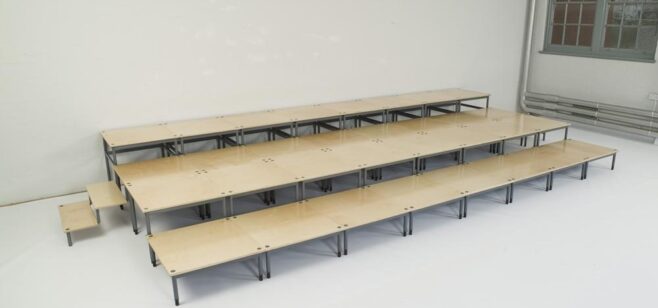
Selecting the appropriate staging equipment is essential. A modular stage platform offers many advantages, making it the ideal choice for a wide range of events. Its affordability, lightweight design, and portability make it incredibly practical. Modular staging is quick and easy to set up – no tools are required. Simply lay out your frames, add tie plates to secure, place the lightweight decks onto the frames, and finish with bungs. It really is as easy as 1, 2, 3.
Thanks to their clever design, modular stages are highly customisable. They can be used as stand-alone, portable stages or incorporated into existing systems, offering flexibility for temporary or permanent installations. Despite being light and easy to manoeuvre, modular and demountable stages are extremely strong and reliable, suitable for schools, colleges, community halls, businesses, hotels, churches, and conference centres.
At Stage Systems, our modular staging kits include everything you need: decks, frames, steps, tie plates, bungs, and a handy storage trolley. A range of accessories such as skirting, access ramps, safety handrails and fascia panels are also available. You can choose from different surface finishes and select from three standard heights or request bespoke heights for more specialised needs. Whatever your event or venue, modular staging transforms your space with minimal effort and maximum impact.
Plan Your Backdrop
The backdrop frames the action and contributes significantly to the atmosphere. A plain curtain can create a simple, elegant background, while printed or themed backdrops add visual impact and help convey the theme of the event. For seasonal events like Christmas, Easter, or Halloween, incorporating relevant imagery, colours, and props will enhance the audience’s immersion.
Stage Systems also offers professional backdrop solutions perfect for drama, presentations, and productions. Our Stage Backdrop Drama Scenery products are lightweight, easy to install, and designed to complement your staging perfectly. Whether you require a simple curtain, a dramatic scene, or a branded display, our backdrops provide a polished and professional look. These high-quality backdrops are a fantastic addition to any event set-up, ensuring your stage is both functional and visually striking. View our Stage Backdrops here.
Pay Attention to Lighting
Lighting is key to drawing attention to performers and creating the right mood. Even a basic set-up of spotlights and coloured washes can make a huge difference. LED uplighting can add depth and interest to your backdrop and staging area. Always test your lighting arrangement well in advance to ensure it highlights focal points effectively, avoids glare, and complements your set design.
Incorporate Sound Systems
Good acoustics are vital, particularly in larger or more echo-prone spaces. If natural acoustics are poor, a sound system will be necessary. Microphones, speakers, and mixers should be positioned carefully to avoid feedback and ensure even sound distribution. Perform full sound checks before the event to guarantee clarity and volume for all performers and speakers.
Add Finishing Touches
Small details help to complete the look and make your event feel special. Branded banners, floral displays, lecterns, seating, props, and theming elements will all contribute to the final impression. Think also about practicalities such as safe, sturdy steps and handrails, as well as ensuring surfaces are non-slip for performer safety.
Rehearse and Refine
Once everything is in place, conduct a full rehearsal. This allows you to test the flow of the event, fine-tune lighting and sound, and address any unexpected issues. Walk through the space as an audience member would to spot any improvements that could enhance visibility, accessibility, or atmosphere.
An effective stage design balances practicality with creativity. With careful planning, the right modular stage system, an attractive backdrop, and attention to lighting and sound, you can create a professional, welcoming environment that elevates your event. At Stage Systems, we are proud to offer versatile, high-quality staging and backdrop solutions to help you bring your vision to life. Whether your event is large or small, we have the tools to help you succeed.