


According to figures published in October, schools across England will receive a minimum of £5,000 per pupil. This is one of the biggest increases in funding for schools in over 10 years. This was swiftly followed by the Prime Minister’s announcement that school budgets will increase to over £14 billion over the next few years.
How each region is allocated the increase in budget depends on the variety of schools within the region. When the budget is announced, secondary schools usually receive more funding over primary schools as they offer the core subjects.
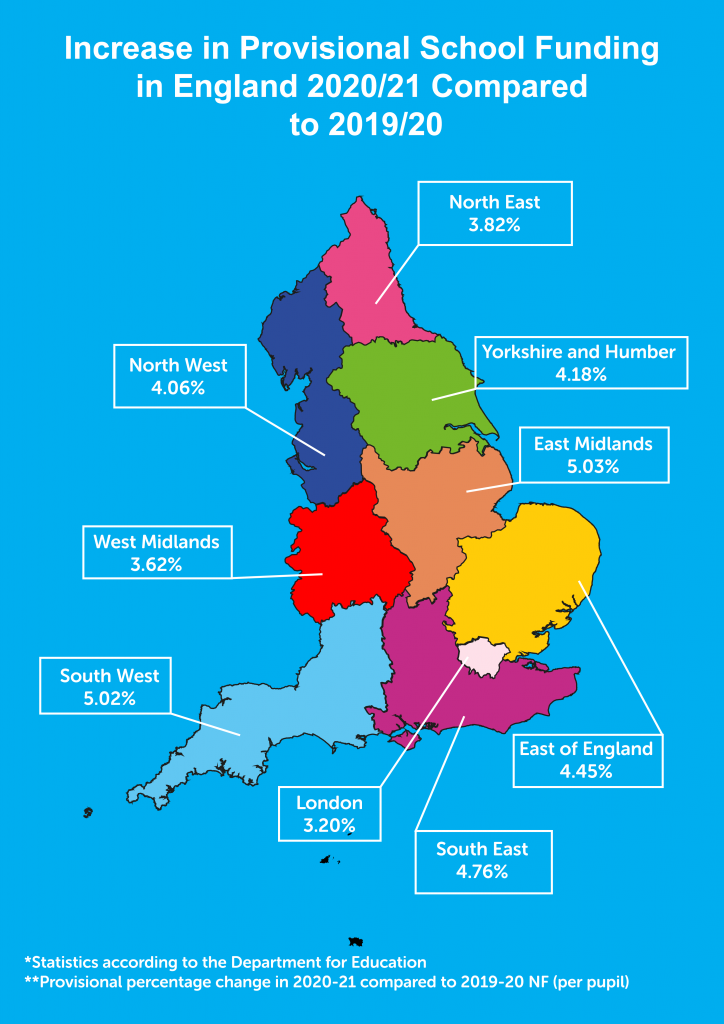
The released data shows us that the East Midlands should see the highest increase with around a 5.03% increase in funding per pupil, whereas London will see the lowest increase at just 3.20%. According to the data released, funding in England should increase by an average of 4.24%.
However, critics have pointed out that the funding doesn’t set out how much of this is inflation and that the schools budget will rise by 2023 anyway due to the increase in pupils and the need for education. However, schools will not see the additional budget until September of this year due to term-time releases and then the different sectors will have to work together to make sure the funding goes to the correct areas.
The infographic below shows the percentage increase in funding per pupil in regions across England for 2020/21.
The Region with the Highest Increase
Areas such as the East Midlands and the South West have over 400,000 students and are likely to receive over a 5% increase in funding per pupil. This could be due to the number of pupils within the region or the demand for increases in the funding.
The Region with the Lowest Increase
London will see the lowest provisional increase at just 3.20%. With a student population of 744,873, there is also more demand for the allocated funding. This means that students will get less spent on them in comparison to their peers from another region.
Schools can apply for additional funding if they don’t get enough to cover basics and will be judged on these categories:
- Deprivation
- Looked-after children (optional)
- Prior attainment: based on the number of children who are assessed as not achieving a good level of development in the Early Years Foundation Stage Profile
- English is not their first language
- Mobility (optional)
The aim of the extra funding is to help schools in deprived areas or that have a large number of pupils from a disadvantaged background, to help raise the attainment of children who statistically perform worse than their peers.
Where Budget is Usually Spent
School funding is usually received in September as this coincides with the new school term. Within a school, the funding that they are given is usually allocated to the following areas:
Teachers – Salaries and benefits tend to be the most expensive elements of a school and the majority of the funding tends to be used to cover these costs.
Operations and Maintenance – General upkeep of the school which includes heating, repairs and a groundskeeper.
Food – School lunches provide a lot of support for students who have no food at home or come from a deprived background. Free school meals are usually covered within the funding.
Instructional equipment – Equipment that the funding has to be spent on includes whiteboards, markers, projectors and other everyday classroom equipment.
Many schools have their budgets planned out in advance so they know where the money will go. They can then check to see if they will need to borrow money from other services or whether they will need to make cuts to teaching staff or other areas to supplement the lack of funds.
Where Could The Funding Increase Be Spent?
Increased funding will allow for more jobs to be created within the schools and will ease some of the pressure faced by teachers and staff. Increased funding will allow schools to hire more teachers/assistants and even dinner ladies and break-time staff, hopefully increasing staff productivity and reducing an already heavy workload.
As well as this, with the increase in budget, schools may have the ability to bring back the creative subjects such as drama and music or will be able to buy additional equipment which will be beneficial for the school, pupils and community. Creative subjects allow students to develop independent, curious and open minds.
Students who have taken creative subjects like music and drama have previously expressed that subjects like these help them build their self-esteem and confidence. Combining these skills in adult life will help them develop the ability to sell themselves for future career prospects such as job interviews and meetings. It’s also important that students experience a varied education allowing them to be open about discovering an occupation which they will enjoy.
Being able to perform on stage at Early Years level also benefits a child’s development in language and communications skills, contributing to their already developing vocabulary.
As well as creative subjects, physical subjects could also benefit from an increase in funding. Subjects such as Physical Education may be able to afford more equipment which could help to lower the rise in childhood obesity and encourage kids to be more active.
Furthermore, having additional funding could have a wider positive impact on the community that the schools are in. Any extra equipment or resources that are bought as a result of the increased funding can be used for hosting fundraising events, after-school sports clubs and school performances.
Here at Stage Systems we offer expert advice on how to make the most of your drama and performance space using excellent quality products, combined with long guarantees we’ll help you make the most of your budget.