



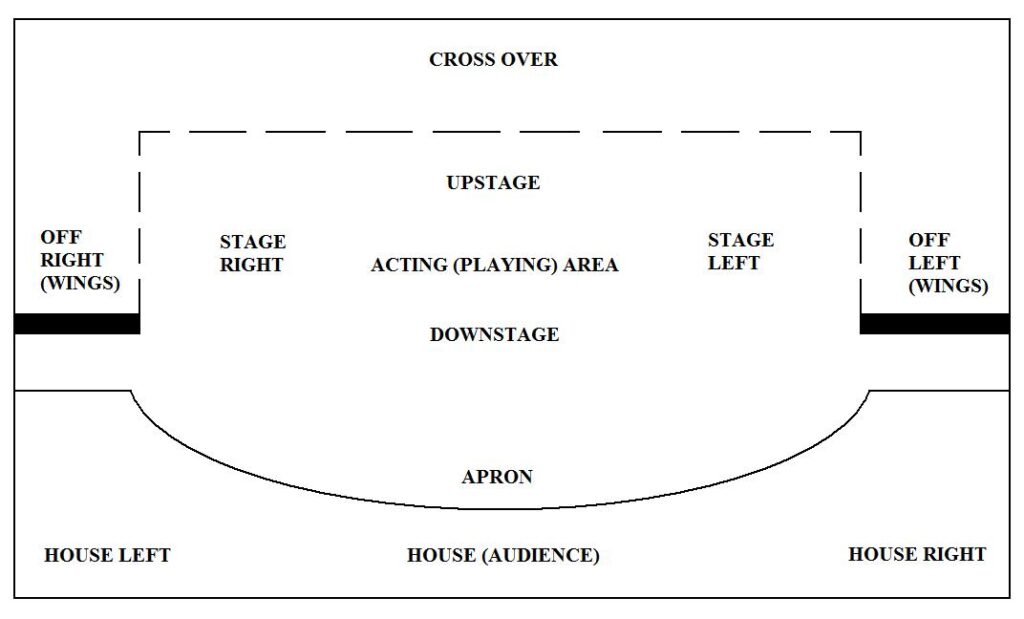
The stage is the heart of theatrical performance. It is where the magic of drama unfolds, where characters come to life, and where stories are told. However, the stage is not just a simple platform where actors perform. It is a complex entity with various parts, each with its own function and significance. Understanding the parts of a theatre stage is crucial for anyone involved in drama studies, as it provides insight into the mechanics of staging a play and the art of performance. It is a requirement of GCSE Drama Studies students to be able to know and understand “the drama and theatre terminology used by theatre makers and how to use it appropriately”. This article will delve into the different parts of a stage, their functions, and their importance in the world of drama.
Proscenium Arch
The proscenium arch, also known as the picture-frame stage. As the name suggests, it is a large arch, through which the audience views the performance. The area behind this arch is known as the stage, and the area in front is the auditorium.
Apron
The apron is the part of the stage that extends beyond the proscenium arch, closer to the audience. It is often used for monologues or soliloquies where the actor directly addresses the audience.
Wings
The wings are the areas on either side of the stage, hidden from the audience’s view. They are used by actors waiting to enter the stage and for storing props and set pieces.
Backstage
This is the area behind the stage where props, costumes, and other equipment are stored. It is also where actors prepare before going on stage.
Downstage
This is the part of the stage closest to the audience. The downstage is often the most visible area and is used for important scenes.
Upstage
This is the part of the stage furthest from the audience. Actors may move upstage to draw the audience’s attention to a particular part of the scene.
Stage Left and Stage Right
These terms refer to the left and right sides of the stage from the perspective of the actors facing the audience. Stage left can also be referred to as Audience Right, and vice versa. They are crucial for blocking and choreographing movements on stage.
Centre Stage
This is the acting area and the middle of the stage, visible from all sides. It is often the focal point of the action on a stage.
Now we’ve covered the glossary of terms for what the parts of the stage are – how do you set this up? Stage design is a large part of what makes a performance. We’ve put together a few tips on how to get the most of out your physical stage setup and make the show even more spectacular:
- Stage Flooring: Ensure the stage floor is appropriate for the performance (wood, carpet, etc.).
- Backdrops and Scenery: Install backdrops, curtains, or LED screens to enhance visual appeal.
- Props Setup: Arrange props or set pieces according to the performance requirements. Our modular Stage Blocks are perfect for this!
- Safety Measures: Add safety barriers, anti-slip tape, or safety nets as needed.
To create the perfect stage for a drama piece, why not take a look at our easy-build Q-build staging. Alternatively contact us and we can discuss your requirements, offer valuable advice and provide a written quote.