


Choosing the right stage size for a primary school is about more than just fitting a platform into a hall. It needs to support assemblies, performances, presentations and day-to-day activities, while remaining safe, practical and flexible.
At Stage Systems, we regularly help schools plan staging that works for both current needs and future growth. Below is a straightforward guide to help you determine the right size for your space.
What Will the Stage Be Used For?
Before deciding on dimensions, it’s important to think about how the stage will be used.
Most primary schools need staging for:
- Assemblies and presentations
- School plays and performances
- Music concerts and recitals
- Guest speakers and events
- Exams or temporary seating layouts
If your school regularly hosts productions with large groups of pupils, you’ll likely need a larger stage than a school using it mainly for assemblies.
Stage System Options for Primary Schools
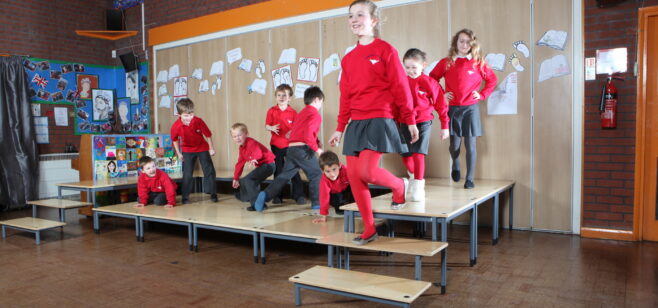
While every school hall is different, many primary schools choose modular staging systems that offer flexibility and ease of use. At Stage Systems, three popular options are Q-Build, Multi-dek and Q-Plus, each suited to different requirements.
Q-Build Staging
A lightweight, modular system designed for quick assembly and reconfiguration. Q-Build is ideal for schools that need a flexible solution for assemblies, performances and temporary layouts. It’s easy to handle, store and adapt depending on the event.
Multi-dek Staging
A robust, heavy-duty staging option designed to offer a more permanent look and feel, while still being fully demountable when needed. Multi-dek staging is ideal for schools that regularly host performances or require a dependable system that can handle frequent use, higher loads and repeated setups.
Q-Plus Staging
A premium staging solution that offers enhanced strength and stability. Q-Plus is well suited to larger productions, concerts or schools looking for a more permanent-feel modular system with a high-quality finish. Q-plus is also ideal for being used as a tiering system for seating.
The right system will depend on how often the stage is used, how it needs to be configured, and the level of durability required.
How Many Children Need to Fit on Stage?
A useful way to estimate stage size is by considering how many pupils will be performing together.
As a general guide:
- Standing pupils need around 0.5m² each
- Seated pupils (chairs or instruments) require more space
- Performances with movement need additional room for safety
For example, a class of 30 children standing in rows may comfortably fit on a medium-sized stage, whereas a full year group performance would require something larger.
Fixed vs Modular Staging
Many schools now choose modular staging systems rather than permanent installations.
Benefits include:
- Flexibility to adjust size and layout
- Easy storage when not in use
- Ability to expand as needs change
- Multi-purpose use within the hall
Modular staging is particularly useful for primary schools where space needs to be adaptable throughout the year.
Getting the Right Stage for Your School
There’s no one-size-fits-all answer when it comes to staging for primary schools. The ideal solution depends on your hall size, pupil numbers and how the space is used throughout the year.
Working with an experienced provider like Stage Systems ensures you get a stage that is safe, practical and built to last.
If you’re unsure what size stage your school needs, getting expert advice can help you make the right decision with confidence.